Freehold plots in Govindpuram, Ghaziabad
Posted By
Harnandipuram Ghaziabad
Date
August 03, 2026
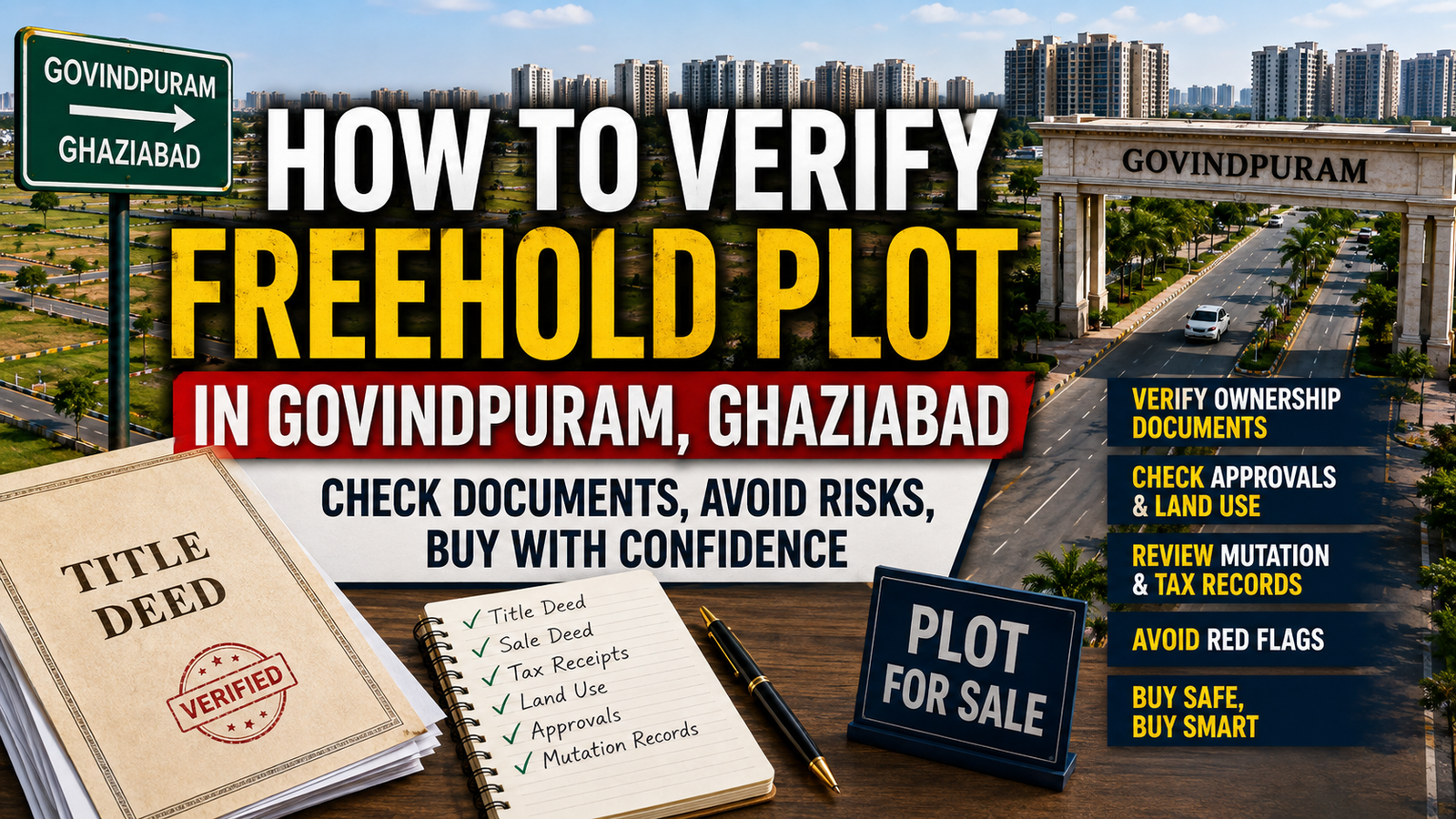
If you are looking for a freehold plot in Govindpuram, Ghaziabad, the first thing to verify is not the price, but the legal status of the land. A plot may look attractive on paper, but the real value comes from clear ownership, proper approvals, and a clean title.
What a freehold plot means
A freehold plot generally means the owner has full ownership rights over the land, subject to applicable laws and local regulations. In simple terms, the land is not held for a fixed lease period. That is why freehold property is often preferred by buyers who want long-term control and easier transferability.
However, the word “freehold” in a listing is not enough by itself. The ownership papers must confirm it. Always check the title deed and related records before making any payment.
Why Govindpuram attracts buyers
Govindpuram is a well-known locality in Ghaziabad and attracts both homebuyers and investors. Many people look for plots here because they want a residential location with growth potential and city connectivity.
That said, location alone should never replace legal due diligence. A good area is useful, but a clean title is essential.
Freehold vs leasehold
The basic difference
A freehold plot is usually owned outright, while a leasehold plot is held for a fixed period under lease terms. For many buyers, freehold is easier to understand and usually simpler to transfer.
Why the difference matters
If you plan to hold the land for a long time, construct on it, or resell it later, the ownership structure matters a lot. A freehold plot often feels safer to buyers, but only if the documents are complete and genuine.
How to verify a freehold plot in Govindpuram
Start with ownership papers
Ask for the sale deed, title deed, and previous ownership chain. The seller’s name should match the documents. If the names do not match, stop and investigate further.
Check land use and approvals
Make sure the plot is meant for residential use if that is your plan. Also confirm whether the layout or land use has the required approval status. Do not assume that every plotted land listing is legally ready for construction.
Review mutation and tax records
Mutation records help show that ownership updates have been reflected in official records. Property tax receipts can also help confirm that the plot is being handled as claimed. These records are not enough on their own, but they are important supporting documents.
Documents you should ask for
Essential papers
Before buying, ask for the current title deed, previous sale deeds, property tax receipts, identity documents of the seller, and any approval papers related to the plot. If someone is selling on behalf of the owner, ask for a valid power of attorney.
Why papers matter
Paperwork is what separates a real property deal from a risky one. If the seller cannot show original documents or keeps delaying, treat that as a serious warning sign.
Common red flags
Be careful if you notice these signs
If the price is far below similar plots in the area, the boundary is unclear, the title chain has missing links, or the seller avoids document checks, move slowly. These are common warning signs in land deals.
Another red flag is hearing phrases like “documents will be arranged later” or “registry is not a problem.” In property buying, later is often when problems become expensive.
Simple buying checklist
Before you pay anything major
Shortlist the plot, verify the seller’s identity, check the title chain, review land use, inspect the plot physically, compare nearby prices, and have a property lawyer review the documents. Then register only after everything matches.
A practical rule
If one important document is missing, pause the deal. If several are missing, walk away.
Questions to ask the seller
Use direct questions
Ask whether the plot is definitely freehold, who the current legal owner is, whether any loan or dispute exists, whether the land is approved for residential use, and whether all papers are original and available for inspection.
Good sellers answer clearly. Unclear answers usually create future risk.
Final advice for buyers
Think like a cautious buyer
A freehold plot in Govindpuram, Ghaziabad, can be a smart choice if the title is clean and the paperwork is complete. The safest purchase is one that passes verification, not one that only looks attractive in an advertisement.
If you are serious about buying, do not rely only on a broker’s word. Verify the documents yourself and, when in doubt, take legal advice before signing anything.