What is Ghaziabad? Everything You Need to Know About This Delhi NCR Satellite City.
Posted By
Harnandipuram Ghaziabad
Date
June 10, 2026
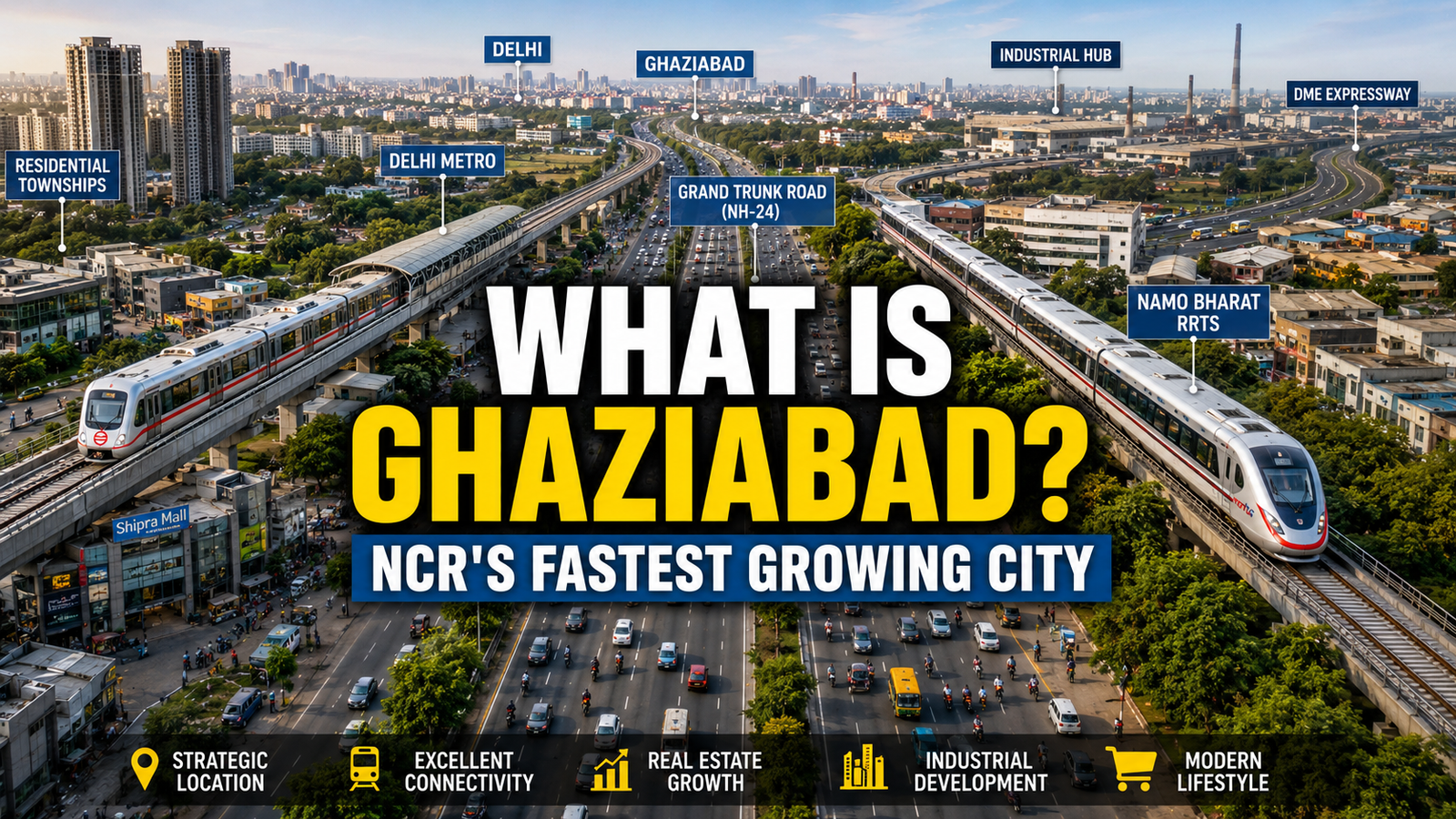
If you've ever heard the name Ghaziabad in property discussions, job talks, or travel plans, you might be wondering: what is Ghaziabad really? You're not alone. Many people across India – especially those looking to buy property, relocate for work, or invest in emerging cities – ask this exact question.
Ghaziabad is a massive satellite city of Delhi located in northwestern Uttar Pradesh, just 19 kilometers east of Delhi. Founded in 1740 by Mughal general Ghazi-ud-din, it's officially known as the "Gateway of Uttar Pradesh" because it's the first major city you enter when coming from Delhi into UP. Today, it's one of the most important industrial hubs, residential centers, and commercial zones in the entire Delhi NCR region.
But Ghaziabad isn't just about history or location. It's a city that's changing fast – with new metro lines, RRTS connectivity, luxury residential projects, industrial growth, and a real estate market that's seen prices jump by 140% in luxury segments since 2019. Whether you're a property buyer, investor, student, job seeker, tourist, or someone planning to relocate to NCR, this complete guide will give you everything you need to know about Ghaziabad city.
Quick Facts About Ghhaziabad City
Before we dive deep, here's a quick overview to help you understand Ghaziabad at a glance:
| Aspect | Details |
|---|---|
| State | Uttar Pradesh |
| District | Ghaziabad (declared district in 1976) |
| Location | 28°40′N, 77°25′E; 19 km east of Delhi, 46 km southwest of Meerut |
| Founded | 1740 by Ghazi-ud-din, Mughal general |
| Original Name | Ghazi-ud-din Nagar |
| Population | Approximately 2.3–2.5 million (city); over 3.5 million (district) |
| Region | Delhi NCR / National Capital Region |
| Key Role | Industrial hub, residential suburb of Delhi, Gateway of UP |
| Connectivity | Delhi Metro, RRTS, Grand Trunk Road, railways, highways |
| Real Estate Trend | Luxury prices up 140% since 2019; 40% overall growth; top sectors: Pandav Nagar, Dundahera, Vaishali |
About Ghaziabad: The Complete Overview
Ghaziabad city is not just another name in Uttar Pradesh. It's a city that has grown from a small Mughal settlement into one of the most economically important cities in the Delhi NCR region. Located in northwestern Uttar Pradesh, Ghaziabad serves as both an industrial powerhouse and a residential suburb for people working in Delhi and New Delhi.
The city's strategic location on the Grand Trunk Road, near the Hindon River, has made it a commercial and transportation hub for centuries. Today, Ghaziabad is home to thousands of manufacturing units, educational institutions, healthcare centers, shopping malls, and modern residential complexes. It's also one of the fastest-growing urban development zones in India, with smart city growth initiatives and massive infrastructure development projects underway.
For people relocating to NCR, Ghaziabad offers a perfect balance – you get NCR connectivity and job opportunities without the extreme Delhi prices. For property buyers and investors, the Ghaziabad property market is attracting serious attention because of its growth potential. For students and job seekers, the city has excellent educational institutions and a thriving industrial sector that offers employment across multiple industries.
Ghaziabad History: From Mughal Era to Modern Industrial Hub
Understanding Ghaziabad history is essential to understanding why this city is so important today. The story of Ghaziabad begins in ancient times, but its modern identity was shaped in the 18th century.
Ancient and Medieval Period
The Ghaziabad region has a rich history dating back to ancient times. The area was part of the Mauryan Empire in the 3rd century BCE and later became a significant center during the Gupta Empire. Over the centuries, this region witnessed the rise and fall of various empires, including the Mughals and the Delhi Sultanate.
Founding in 1740
The city was officially founded in 1740 by Ghazi-ud-din, a general of the Mughal Emperor Muhammad Shah. Originally named Ghazi-ud-din Nagar, the city was established as a military and administrative center. This is where the name "Ghaziabad" comes from – "Ghazi" referring to Ghazi-ud-din, and "abad" meaning "settled place" or "city" in Persian.
The founding of Ghaziabad played a pivotal role during the First War of Indian Independence in 1857, when the city became an important center for resistance against British colonial rule.
British Colonial Era
During the British colonial era, Ghaziabad gained prominence as an important industrial and commercial hub. The construction of the Grand Trunk Road in the 19th century further enhanced its connectivity, contributing significantly to economic growth. The city's location on this major highway made it a crucial transportation and trade center.
Post-Independence Development
After India gained independence in 1947, Ghaziabad continued to evolve as an industrial and manufacturing center, attracting businesses and migrants from across India. The city's industrial growth was supported by its proximity to Delhi, excellent rail and road connectivity, and available land for development.
In 1976, Ghaziabad was officially declared a district in the state of Uttar Pradesh. This was a major milestone that brought more administrative focus, infrastructure investment, and development planning to the city.
Modern Ghaziabad
Over the years, Ghaziabad has experienced rapid urbanization and population growth. The city has expanded its infrastructure and witnessed developments in various sectors, including education, healthcare, and technology. Today, Ghaziabad stands as a bustling satellite city of Delhi, playing a crucial role in the economic and cultural landscape of the National Capital Region.
The Ghaziabad development story is one of transformation – from a Mughal military settlement to a British industrial center, and now to a modern NCR hub with smart city growth initiatives, metro connectivity, and a booming real estate market.
Ghaziabad Location: Where Exactly Is It?
One of the most important questions about Ghaziabad is its location. Understanding Ghaziabad location helps you understand why the city has grown so fast and why it's so attractive for property investment and relocation.
Geographic Position
Ghaziabad city lies in northwestern Uttar Pradesh state, northern India. Specifically, it's located at:
- Latitude: 28°40′ North
- Longitude: 77°25′ East
- Distance from Delhi: Approximately 19 kilometers east
- Distance from Meerut: Approximately 46 kilometers southwest
The city lies on the Grand Trunk Road, about a mile east of the Hindon River. This positioning on one of India's most important highways has been crucial to its development as a commercial and transportation hub.
Delhi NCR Connection
Ghaziabad is part of the Delhi NCR (National Capital Region), which is one of the most economically important regions in India. As a satellite city of Delhi, Ghaziabad benefits from:
- Proximity to Delhi's job market
- Excellent connectivity to New Delhi
- Shared infrastructure and development projects
- Access to NCR's business and commercial opportunities
The city is officially described as lying "just east of and is a suburb of Delhi and New Delhi". This makes it one of the closest major cities to Delhi in Uttar Pradesh.
Neighboring Areas
Ghaziabad is surrounded by several important areas and cities:
- Delhi: 19 km west
- Meerut: 46 km northeast
- Mohannagar: Part of Ghaziabad district
- Modinagar:Nearby industrial town
- Dasna:Known for Dasna Jail
- Hindon River:Flows near the city
Why Location Matters
The Ghaziabad location is what makes it so attractive for:
- Property buyers:Close to Delhi jobs without Delhi prices
- Investors:High growth potential due to NCR location
- Job seekers:Easy commute to Delhi NCR job markets
- Students:Near educational hubs in Delhi and NCR
- Tourists:Convenient stop between Delhi and UP destinations
- People relocating to NCR:Perfect balance of connectivity and affordability
Ghaziabad Infrastructure: Modern Development and Connectivity
Ghaziabad infrastructure has seen massive transformation over the past two decades. The city has evolved from a basic industrial town into a modern urban development center with state-of-the-art facilities.
Metro Connectivity
One of the biggest infrastructure developments in Ghaziabad is the Delhi Metro connection. The Metro has revolutionized commute between Ghaziabad and Delhi, making it possible to reach central Delhi in under an hour. This metro connectivity has been a major driver of real estate growth in the city.
The Metro lines connect key areas like:
- Mohan Nagar
- Shahpur
- Vaishali
- Rajasthan Purana
- And other major residential and commercial zones
RRTS (Rapid Rail Transit System)
The RRTS project is another massive infrastructure development that will further enhance Ghaziabad's connectivity. This high-speed rail system will connect Ghaziabad to Delhi and other NCR cities at speeds of up to 180 km/h, making commute even faster and more efficient.
Road Infrastructure
Ghaziabad's road infrastructure is excellent due to its position on the Grand Trunk Road. The city has:
- Well-maintained national highways
- Elevated roads (including Hindon Elevated Road)
- Connected metaled roads to Meerut and other cities
- Modern expressways and city roads
- Good connectivity to Delhi's road network
Rail Connectivity
Ghaziabad has excellent rail connectivity with:
- Ghaziabad Junction – a major railway station
- Multiple trains connecting to Delhi, Meerut, and other cities
- Freight services supporting industrial growth
- Passenger services for daily commuters
Utilities and Modern Infrastructure
The city has developed modern infrastructure including:
- 24-hour electricity in most areas
- Better water supply systems
- Modern drainage and sewage systems
- Telecommunications and internet infrastructure
- Mall and commercial complex facilities
- Healthcare infrastructure with hospitals and clinics
- Educational infrastructure with schools and colleges
Industrial Infrastructure
As an industrial hub, Ghaziabad has:
- Multiple industrial estates and zones
- Manufacturing units across various sectors
- Warehousing and logistics facilities
- Power supply suited for industrial needs
- Transport and logistics connectivity
The infrastructure development in Ghaziabad is ongoing, with the city working towards smart city growth and urban development goals. This continuous improvement makes Ghaziabad increasingly attractive for property investment and residential living.
Ghaziabad Population: Demographics and Growth
Ghaziabad population has grown dramatically over the years, reflecting the city's rapid urbanization and development.
Current Population
As of recent estimates:
- City population:Approximately 2.3–2.5 million people
- District population:Over 3.5 million people
- Growth rate:Rapid, due to urbanization and migration
The city has experienced rapid urbanization and population growth over the years. This growth is driven by:
- Migration from other parts of India for jobs
- Proximity to Delhi's job market
- Industrial growth attracting workers
- Better infrastructure and living conditions
- Real estate development attracting residents
Demographic Composition
Ghaziabad has a diverse population with people from various backgrounds:
- Local residents:People whose families have lived in Ghaziabad for generations
- Delhi migrants:People working in Delhi who chose Ghaziabad for residence
- UP migrants:People from other parts of Uttar Pradesh
- Other Indian states:People from Bihar, Rajasthan, Haryana, and other states
- Diverse cultures:The city has diverse cultures reflected in its communities
Population Density
The population density in Ghaziabad is high, especially in:
- Raj Nagar District Center
- Vaishali sectors
- Pandav Nagar
- Mohan Nagar
- Old Ghaziabad areas
Newer developments in areas like Siddharth Vihar and Dundahera are seeing rapid population increase due to new residential projects.
Why Population Matters
The growing Ghaziabad population is significant for:
- Real estate:More demand for housing drives property market growth
- Business:Larger consumer base for shops, services, and commercial development
- Infrastructure:Need for continued infrastructure development
- Employment:More job opportunities as population grows
- Education:Need for more schools and educational institutions
- Healthcare:Demand for hospitals and medical facilities
Ghaziabad Economy and Industrial Hub Status
Ghaziabad is known as an industrial hub, and this is one of the key reasons for its economic importance.
Industrial Sector
The city has developed as an important industrial centre with manufacturing across multiple sectors:
- Light engineering:Tools, machinery parts, electrical goods
- Textiles:Garment manufacturing, fabric production
- Chemicals:Industrial chemicals, pharmaceuticals
- Electronics:Consumer electronics, components
- Food processing:Packaged foods, beverages
- Printing and packaging:Printing units, packaging materials
- Automobile parts:Components for automotive industry
During the British colonial era, the city gained prominence as an important industrial and commercial hub. After independence, Ghaziabad continued to evolve as an industrial and manufacturing center, attracting businesses and migrants.
Industrial Estates
Ghaziabad has multiple industrial areas and estates:
- Industrial Area Ghaziabad
- Mohan Nagar Industrial Zone
- Shahpur Industrial Area
- Various private industrial complexes
Commercial Development
The city has also seen significant commercial development including:
- Shopping malls and retail complexes
- Commercial offices and business centers
- Market areas and shopping streets
- Hotels and hospitality businesses
- Food and restaurant businesses
- Service industry businesses
Economic Growth Drivers
Ghaziabad's economy is growing due to:
- Industrial growth:Continued expansion of manufacturing
- NCR connection:Benefit from Delhi NCR economic activity
- Infrastructure:Better connectivity attracts businesses
- Real estate:Property development creates economic activity
- Services sector:Growing retail, healthcare, education sectors
- Technology:Emerging tech and IT services
The city's position as an industrial hub makes it attractive for job seekers looking for employment in manufacturing, engineering, and related sectors.
Ghaziabad Real Estate and Property Market: Complete Guide
One of the most talked-about aspects of Ghaziabad today is its real estate market. The Ghaziabad property market has seen explosive growth, making it a hot destination for property buyers and investors.
Current Market Trends
The real estate scene in Ghaziabad saw a dramatic change in 2025, with significant price appreciation across the city. Key trends include:
| Metric | Details |
|---|---|
| Luxury price growth | 140% increase since 2019 |
| Overall price growth | Up to 40% city-wide |
| 2025 forecast | 5-7% additional growth expected |
| Top growth sectors | Pandav Nagar, Dundahera, Sector 2 Vaishali |
| Growth in top sectors | 100%+ price appreciation |
Why Ghaziabad Real Estate is Booming
Several factors are driving the Ghaziabad real estate boom:
- RRTS impact:The upcoming RRTS is boosting property values
- Metro connectivity:Delhi Metro has made commute easier, increasing demand
- Infrastructure development:Better roads, utilities, and facilities attract buyers
- NCR location:Proximity to Delhi makes it attractive for residents working in Delhi
- Affordability:Lower prices than Delhi while offering NCR benefits
- Developer investments:Major developers are launching projects in Ghaziabad
- Changing buyer preferences:More people looking for NCR properties outside Delhi
Top Investment Areas
Based on 2025 trends, the top areas for property investment in Ghaziabad are:
1. Pandav Nagar
Pandav Nagar achieved 100%+ price appreciation due to strategic infrastructure improvements and developer investments. This area is well-connected and has good residential development.
2. Dundahera
Dundahera also saw triple-digit growth rates, driven by infrastructure development and changing buyer preferences. It's emerging as a popular residential zone.
3. Sector 2 Vaishali
Vaishali Sector 2 achieved 100%+ growth, making it one of the hottest investment zones. The area has good connectivity and residential projects.
4. Siddharth Vihar
Siddharth Vihar is mentioned as a top investment area with luxury price jumps. This area is seeing significant residential development.
5. Raj Nagar District Center
Raj Nagar is a established district center with good infrastructure and residential options.
Property Types Available
Ghaziabad offers various property types:
- Residential apartments:From 2BHK to 4BHK luxury apartments
- Villas:Independent villas and villa communities
- Ground floors:Independent ground floor units
- Commercial properties:Offices, shops, retail spaces
- Land plots:Residential and commercial plots
- Pre-owned properties:Second-hand apartments and houses
Price Ranges
While prices vary by area and property type, Ghaziabad generally offers:
- Affordable segments:Properties starting at lower prices than Delhi
- Mid-range segments:Competitive prices for 2BHK and 3BHK apartments
- Luxury segments:High-end properties with significant price growth
The luxury property price increase of 140% since 2019 shows the strong demand for premium properties.
Real Estate Opportunities
Ghaziabad offers multiple real estate opportunities:
- Property investment:High growth potential for investors
- Residential projects:New developments across the city
- Commercial development:Office spaces and retail opportunities
- Rental income:Good rental demand due to NCR workers
- Long-term appreciation:Expected continued growth
For property buyers, Ghaziabad offers the advantage of NCR connectivity at more affordable prices than Delhi. For investors, the 140% luxury price growth and 5-7% forecast for 2025 show strong potential.
Things to Consider Before Buying
Before investing in Ghaziabad property, consider:
- Location and connectivity to your workplace
- Infrastructure development in the area
- Developer reputation and project quality
- Future growth potential of the area
- RRTS and Metro connectivity plans
- Legal clearances and property documentation
- Amenities and facilities nearby
Ghaziabad Development: Future Growth and Urban Transformation
Ghaziabad development is ongoing and the city is transforming into a modern urban center. The city has experienced rapid urbanization and population growth, and this trend is continuing with several major development projects.
Infrastructure Development Projects
Key infrastructure development projects include:
- RRTS:High-speed rail connecting Ghaziabad to Delhi and NCR
- Metro expansion:Additional Metro lines and stations
- Elevated roads:Hindon Elevated Road and other elevated routes
- Highway improvements:Upgrades to Grand Trunk Road and other highways
- Urban development:City planning and modernization initiatives
- Smart city growth:Smart city initiatives and technology integration
Residential Development
The city is seeing massive residential development including:
- New residential projects across multiple sectors
- Luxury apartment complexes
- Villa communities
- Affordable housing projects
- Mixed-development towns
- Plotted developments
Areas like Siddharth Vihar, Pandav Nagar, Dundahera, and Vaishali are seeing significant new residential projects.
Commercial Development
Commercial development in Ghaziabad includes:
- New shopping malls and retail complexes
- Commercial office buildings
- Business parks
- Mixed-use developments
- Retail streets and market areas
- Hotel and hospitality projects
Industrial Development
As an industrial hub, Ghaziabad continues to develop its industrial sector with:
- New industrial estates
- Expanded manufacturing zones
- Warehousing and logistics facilities
- Technology parks
- Industrial infrastructure upgrades
Education and Healthcare Development
The city has witnessed developments in various sectors including education and healthcare:
- New schools and educational institutions
- College and university expansions
- New hospitals and medical centers
- Healthcare infrastructure improvements
- Medical colleges and training centers
Future Growth Potential
Ghaziabad's future growth potential is strong due to:
- NCR location:Continued benefit from Delhi NCR economic activity
- Infrastructure:Ongoing infrastructure development attracting residents and businesses
- Real estate growth:140% luxury price growth shows strong demand
- Industrial expansion:Continued industrial growth
- Connectivity:Better Metro and RRTS connectivity
- Urban development:City modernization and smart city initiatives
Experts forecast another 5-7% growth in 2025 for the real estate market, indicating continued positive momentum.
Living in Ghaziabad: Lifestyle, Amenities, and Community
If you're considering relocating to Ghaziabad, understanding what life is like in the city is important. Ghaziabad offers a good lifestyle with modern amenities and a growing community.
Residential Areas
Ghaziabad has diverse residential areas catering to different needs:
- Established areas:Raj Nagar, Old Ghaziabad, Mohan Nagar
- New developments:Siddharth Vihar, Pandav Nagar, Dundahera, Vaishali
- Luxury zones:High-end apartment complexes and villas
- Affordable housing:Budget-friendly residential options
Amenities and Facilities
Ghaziabad offers modern amenities including:
- Shopping malls and retail centers
- Supermarkets and grocery stores
- Restaurants and food outlets
- Parks and recreation areas (including Swarna Jayanti Park)
- Sports facilities and clubs
- Healthcare centers and hospitals
- Schools and educational institutions
- Banking and financial services
- Telecommunications and internet
Education
Ghaziabad is an educational center with:
- Reputed schools (CBSE, ICSE, state board)
- Colleges and universities
- Professional institutes
- Technical training centers
- Quality education options across levels
Healthcare
The city has developed healthcare infrastructure including:
- Multi-specialty hospitals
- Primary health centers
- Medical clinics
- Pharmacies
- Emergency medical services
Recreation and Entertainment
Ghaziabad offers various recreation options:
- Shopping malls with entertainment zones
- Parks like Swarna Jayanti Park
- Sports clubs and facilities
- Restaurants and cafes
- Cultural centers
- Temple visits (including ISKCON temple)
Community and Culture
The city has diverse cultures with people from various backgrounds. You'll find:
- Local Ghaziabad communities
- Delhi migrants
- People from across Uttar Pradesh
- Migrants from other Indian states
- Mixed cultural practices
- Community events and festivals
Food and Cuisine
Ghaziabad has its own food culture including local favorites like:
- Bhalla (local specialty)
- Tikki (popular snack)
- North Indian cuisine
- Street food options
- Restaurant dining
Commute and Transportation
Living in Ghaziabad offers good connectivity:
- Delhi Metro for Delhi commute
- RRTS for faster NCR connectivity
- Good road network
- Rail connections
- Local transportation (autos, taxis, buses)
For people working in Delhi, Ghaziabad offers the advantage of NCR connectivity at more affordable living costs.
Why People Choose Ghaziabad
People relocate to Ghaziabad for:
- Lower housing costs compared to Delhi
- Good NCR connectivity
- Job opportunities in local industries
- Quality educational institutions
- Developing healthcare facilities
- Modern amenities and lifestyle
- Growing community and infrastructure
- Future growth potential
Ghaziabad Connectivity: How to Reach and Travel Within the City
Ghaziabad connectivity is one of the city's biggest strengths, making it easy to reach and travel within the city.
From Delhi
Reaching Ghaziabad from Delhi is convenient through:
- Delhi Metro:Direct Metro connection to Ghaziabad
- RRTS:Future high-speed rail (180 km/h)
- Road:19 km via Grand Trunk Road or expressways
- Rail:Multiple trains from Delhi stations
- Time:Under 1 hour via Metro, 30-45 minutes by car
Rail Connectivity
Ghaziabad Junction is a major railway station with:
- Trains to Delhi (multiple daily)
- Trains to Meerut
- Trains to other UP cities
- Trains to major Indian cities
- Freight services for industries
- Passenger services for commuters
Road Connectivity
The city's road connectivity includes:
- Grand Trunk Road (major national highway)
- National Highway connections
- Elevated roads (Hindon Elevated Road)
- Connected roads to Meerut (46 km)
- City roads and internal connectivity
- Good bus services
- Auto and taxi availability
Metro Connectivity
Delhi Metro connectivity includes:
- Multiple Metro stations in Ghaziabad
- Direct connection to Delhi Metro network
- Lines covering Mohan Nagar, Shahpur, Vaishali, Rajasthan Purana
- Regular service throughout the day
- Affordable fares
- Reduced commute time to Delhi
The Metro has been a major factor in Ghaziabad's real estate growth.
Internal City Connectivity
Travel within Ghaziabad is supported by:
- Well-connected city roads
- Local bus services
- Auto rickshaws
- Taxi services
- Metro for key corridors
- Good connectivity between residential and commercial areas
Connectivity to Other NCR Cities
Ghaziabad has connectivity to other NCR cities including:
- Delhi (19 km)
- New Delhi
- Meerut (46 km)
- Gurgaon (via Delhi)
- Noida (via Delhi)
- Faridabad (via Delhi)
The RRTS will further enhance connectivity to NCR cities.
Ghaziabad for Different Audiences
Ghaziabad attracts various types of people. Let's look at what the city offers for different audience groups.
For Property Buyers
If you're a property buyer, Ghaziabad offers:
- Affordable prices compared to Delhi
- Strong growth potential (140% luxury growth since 2019)
- Good connectivity to Delhi jobs
- Modern residential projects
- Various property types (apartments, villas, plots)
- Top investment areas: Pandav Nagar, Dundahera, Vaishali
- Expected 5-7% growth in 2025
For Investors
For real estate investors, Ghaziabad provides:
- High appreciation potential
- 100%+ growth in top sectors
- RRTS impact boosting values
- Metro connectivity driving demand
- Strong rental demand from NCR workers
- Long-term growth potential
- Developer investments in the city
For Students
Students will find Ghaziabad offers:
- Quality schools (CBSE, ICSE, state boards)
- Colleges and universities
- Professional institutes
- Technical training centers
- Good educational infrastructure
- Access to Delhi educational institutions
- Affordable living costs
For Job Seekers
Job seekers benefit from Ghaziabad's:
- Industrial hub status with manufacturing jobs
- Engineering and technical opportunities
- Service sector jobs (retail, healthcare, education)
- Commute options to Delhi job markets
- Growing commercial development
- Multiple industrial estates
- Emerging IT and technology sectors
For Tourists
Tourists visiting Ghaziabad can explore:
- Historical sites from Mughal era
- ISKCON temple
- Swarna Jayanti Park
- Hindon River area
- Dasna Jail (historical site)
- Local food (Bhalla, Tikki)
- Shopping areas
- Convenient stop between Delhi and UP destinations
For People Relocating to NCR
For those relocating to NCR, Ghaziabad offers:
- Perfect balance of NCR connectivity and affordability
- Lower housing costs than Delhi
- GoodMetro and RRTS connectivity
- Quality educational institutions
- Developing healthcare facilities
- Modern amenities
- Growing community
- Job opportunities locally or in Delhi
- Future growth potential
For Real Estate Researchers
Real estate researchers will find Ghaziabad interesting for:
- 140% luxury price growth data
- 100%+ growth in specific sectors
- RRTS impact on property values
- Metro connectivity effects
- Infrastructure development patterns
- NCR real estate trends
- Urban development studies
- Market forecast data (5-7% for 2025)
FAQs About Ghaziabad
Here are 10+ frequently asked questions about Ghaziabad with clear answers:
1. What is Ghaziabad?
Ghaziabad is a major satellite city of Delhi located in northwestern Uttar Pradesh, India. Founded in 1740 by Mughal general Ghazi-ud-din, it serves as the "Gateway of Uttar Pradesh" and is a key industrial and commercial hub in the Delhi NCR region with excellent metro connectivity, rapid infrastructure development, and a booming real estate market.
2. What is Ghaziabad known for?
Ghaziabad is known for being an industrial hub, a Delhi NCR satellite city, having excellent Metro connectivity, rapid infrastructure development including RRTS, a booming real estate market with 140% luxury price growth, and being the "Gateway of Uttar Pradesh".
3. Where is Ghaziabad located?
Ghaziabad is located in northwestern Uttar Pradesh, India, at 28°40′N, 77°25′E. It lies 19 kilometers east of Delhi and 46 kilometers southwest of Meerut, on the Grand Trunk Road near the Hindon River. It's part of the Delhi NCR region.
4. What is the history of Ghaziabad?
Ghaziabad history dates back to ancient times when the region was part of the Mauryan Empire (3rd century BCE) and Gupta Empire. The city was founded in 1740 by Ghazi-ud-din, a Mughal general, and was originally named Ghazi-ud-din Nagar. It played a pivotal role in the 1857 First War of Indian Independence, became an industrial hub during British era, and was declared a district in 1976.
5. What is the population of Ghaziabad?
Ghaziabad population is approximately 2.3–2.5 million in the city and over 3.5 million in the district. The city has experienced rapid urbanization and population growth.
6. Is Ghaziabad good for property investment?
Yes, Ghaziabad is excellent for property investment. The Ghaziabad property market saw luxury prices skyrocket by 140% since 2019, with experts forecasting another 5-7% growth in 2025. Top sectors like Pandav Nagar, Dundahera, and Sector 2 Vaishali achieved 100%+ price appreciation. The RRTS impact and Metro connectivity are major growth drivers.
7. What is the real estate market trend in Ghaziabad?
The Ghaziabad real estate scene saw dramatic change in 2025 with up to 40% overall price growth city-wide. Luxury properties increased 140% since 2019, and top sectors saw 100%+ growth. Experts forecast 5-7% additional growth in 2025.
8. How is Ghaziabad connected to Delhi?
Ghaziabad is connected to Delhi through Delhi Metro, upcoming RRTS high-speed rail (180 km/h), Grand Trunk Road (19 km distance), railway trains, and expressways. Metro commute takes under 1 hour, while car travel takes 30-45 minutes.
9. What are the best areas to live in Ghaziabad?
The best areas to live in Ghaziabad include Raj Nagar District Center (established), Pandav Nagar (high growth), Dundahera (emerging), Sector 2 Vaishali (top growth), Siddharth Vihar (luxury development), and Mohan Nagar (well-connected).
10. Is Ghaziabad part of Delhi NCR?
Yes, Ghaziabad is part of the Delhi NCR (National Capital Region). It lies just east of and is a suburb of Delhi and New Delhi, making it a key satellite city in the NCR region.
11. What is the infrastructure like in Ghaziabad?
Ghaziabad infrastructure includes Delhi Metro connectivity, upcoming RRTS, Grand Trunk Road and elevated roads (Hindon Elevated Road), railway junction, modern utilities (24-hour electricity, water supply), shopping malls, hospitals, schools, and industrial estates. The city is developing towards smart city growth.
12. What is Ghaziabad famous for besides industry?
Besides being an industrial hub, Ghaziabad is famous for ISKCON temple, Swarna Jayanti Park, historical Mughal sites, local food (Bhalla and Tikki), Dasna Jail, Hindon River, diverse cultures, sports culture, and being the Gateway of Uttar Pradesh.
13. When was Ghaziabad declared a district?
Ghaziabad was officially declared a district in Uttar Pradesh in 1976.
14. Who founded Ghaziabad and when?
Ghaziabad was founded in 1740 by Ghazi-ud-din, a general of Mughal Emperor Muhammad Shah. The original name was Ghazi-ud-din Nagar.
15. What is the future growth potential of Ghaziabad?
Ghaziabad's future growth potential is very strong due to NCR location, ongoing infrastructure development (RRTS, Metro expansion), real estate growth (140% luxury, 5-7% forecast for 2025), industrial expansion, better connectivity, urban development, and smart city initiatives.
Conclusion: Why Ghaziabad Matters in 2026
So, what is Ghaziabad? It's much more than just a city name on a map. Ghaziabad is a dynamic, fast-growing satellite city of Delhi that has transformed from a 1740 Mughal settlement into one of the most important industrial and commercial hubs in the Delhi NCR region.
For property buyers and investors, Ghaziabad offers exceptional opportunities with luxury prices up 140% since 2019 and forecasted 5-7% growth in 2025. The top sectors – Pandav Nagar, Dundahera, and Vaishali Sector 2 – have achieved 100%+ price appreciation, making them hot investment zones.
For students and job seekers, Ghaziabad provides quality educational institutions and a thriving industrial hub with employment across manufacturing, engineering, services, and emerging technology sectors.
For tourists, Ghaziabad offers historical sites, ISKCON temple, Swarna Jayanti Park, local cuisine, and serves as a convenient stop between Delhi and UP destinations.
For people relocating to NCR, Ghaziabad strikes the perfect balance – you get NCR connectivity with Metro and upcoming RRTS, access to Delhi job markets, quality amenities, and modern infrastructure, all at more affordable prices than Delhi.
The city's infrastructure development is ongoing, with RRTS, Metro expansion, elevated roads, and smart city growth initiatives transforming Ghaziabad into a modern urban center. As the "Gateway of Uttar Pradesh," Ghaziabad continues to play a crucial role in the economic and cultural landscape of the National Capital Region.
Whether you're looking to buy property, invest, study, work, visit, or relocate, Ghaziabad city offers compelling advantages backed by historical significance, strategic location, infrastructure development, and strong future growth potential. The Ghaziabad development story is one of continuous transformation, and 2026 marks another chapter of growth for this remarkable NCR city.
If you're considering Ghaziabad for any of these purposes, now is an excellent time to explore what this city offers. The combination of affordability, connectivity, growth potential, and quality of life makes Ghaziabad a standout choice in the Delhi NCR region.